
Naira appreciates against the dollar after Central Bank of Nigeria releases over $411m
It is no news that the big African nation has been going through economic recession accompanied by a depreciating currency, unemployment and general hopelessness with her present government blaming the immediate past government and atimes extending the blame sixteen years down previous governments.
The Nigerian naira fell to an all time low of N560 to the US dollar before the country’s central bank (CBN) intervened by providing the much sought after foreign exchange to end users via the banks so as to ease the pressure on the parallel market which was driving the naira rate down hill at an unprecedented rate.

The CBN had claimed to have been providing forex to the important players in the economy recently publishing data of its forex allocations for the months of October 2016 and later November 2016. The Central bank also claimed to had sold about $2.8bn dollars to manufacturers and other sectors over the two month period of December 2016 and January 2017 according to the report filed by PUNCH. These money ostensibly went to the real sector of the economy,
The Acting Director, Corporate Communications Department, CBN, Mr Isaac Okoroafor, according to PUNCH confirmed the said amount released and explained that manufacturing, raw material, and agriculture among others got the highest amount, adding that this was done by the apex bank as part of its measures to create jobs, reduce the level of poverty and ensure inclusive growth in the economy.
Prior to this in June 2016, the CBN according to businessdayonline also claimed to have cleared a $4 billion backlog of forex demand.
Despite all these massive amounts pumped into the money market, the naira kept losing its value with job losses and decreasing quality of life as inflation rose and money supply plummeted.
The October 2016 CBN report however shed light on why the dollar kept gaining strength as the CBN pumped it into the market, entries in the released report showed discrepancies in forex rates and items listed as “invincible” along with a car importing company supposedly paying $500k school fees.
All these and other discrepancies coupled with the fact that the effect of the money released had no effect on the economy pointed to a massive racketeering either within the CBN or the commercial banks or both institutions.
In response to queries by the public on some of the October transactions especially those done with rates not obtainable anywhere in the world, the CBN responded by not publishing the rate in the November report .
A government critic belonging to the opposition party pointed out the discrepancies in the October report in a video which went viral and the country’s Attorney General wrote a query demanding explanations from the Central Bank governor.

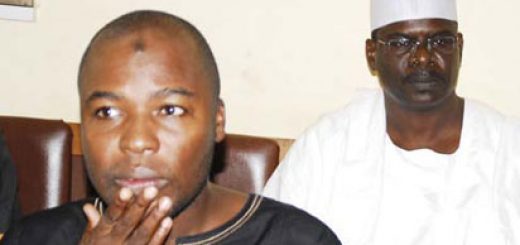
Badamosi Babatunde
The Attorney General of the federation in the reported query dated February 6, 2017 and delivered on the 13th, with reference number HAGF/CBN/2017/VOL.1/1 and titled ‘allegations of racketeering in the Central Bank of Nigeria; disparity in allocation of foreign exchange’, said he became aware of the corruption allegations through several petitions which were backed up by documents.
There were four major allegations against the Emefiele led CBN administration in the letter. These included:
1. Alleged corruption in the apex bank’s “foreign exchange allocation transactions”
2. “Questionable policy” in the CBN’s allocation and sale of foreign currency to Nigerians,
3. Issue of “arbitrary allotment of different exchange rates for same purposes” by the CBN.
4. Allocation of conflicting foreign exchange rates by the apex bank
The report said Malami’s ‘subtle query’ to Emefiele demanded “prompt response” to the allegations.
The letter directed Mr Emefiele to respond to the many allegations in order “to enable us to advise the Presidency and take appropriate measures.”
Its unclear why the CBN after this query made a policy u-turn on the 20th of February and began providing Forex directly to sectors it had hitherto locked out in principle though entries showed they were being serviced in the October and November reports.
The intervention immediately led to huge gains for the naira which currently trades at about N455 to a dollar as against N560 before the intervention.
On the February 22nd however, the Department of state security arrested the critic Mr Babatunde Badamosi who made the viral video that forced the AGF query. He was arrested and held incommunicado and without charge.

As at June ending 2016 when the noose on access to Forex was tightened, the foreign reserves stood at around $26.4bn, (data here) as at 20th February when the policy u-turn occurred it stood at $28.5bn a difference of about $2bn, CBN released about $500m on the 22nd of February but sold only $371m. A breakdown shown by thisday of the forwards indicated that $216,465,671.02 was for 30 days, while $154,345,139.77 was for 60 days. The CBN also did did spot sales of $1.5 million to four banks, totalling $6 million.
The Bank also offered $41 million for sales, of which $35 million was taken up for the payment of school fees, medical bills and personal and business travel allowances.
With the interventions on both days, the CBN sold $491.8 million to commercial banks and authorised dealers in the market.
both for its 30 and 60 days forward yet the naira appreciated.
There is always a story behind every news; there is nothing new in what the CBN has done aside make the forex available to the end users which begs the question, why was it made an elitists trade and why did the rates column disappear from the November report; why did DSS arrest the critic who drew peoples attention to the CBN’s own document and why have we not seen a reply to the query from the CBN?
Perhaps this move is to misdirect and sweep the alleged racketeering under the carpet or it is genuine and made to strengthen the naira, how if its the latter would CBN be able to sustain the intervention? When you add to the mix the current power play about to happen in the Nigerian political arena, these become questions only time will answer.

Recent Comments